


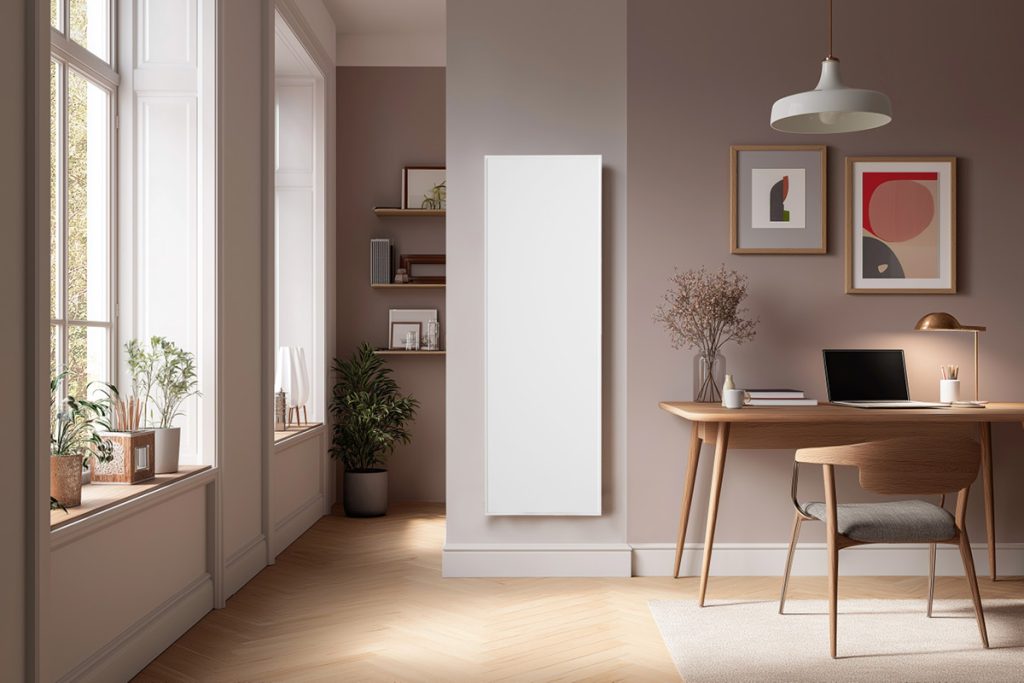
When we think about how our home feels, it is often about the interior design, colours and light. But the heating and the way it is experienced in everyday life play an equally important role.
A heating solution basically consists of two parts:
It is the interaction between the two that determines comfort, functionality, aesthetics and, not least, the atmosphere and experience in your home.
District heating
One of the most widespread solutions in Denmark and is gaining momentum more places in Europe and the UK. District heating is stable, climate-friendly and typically a cheaper source of heat. However, it requires that you live in an area with a district heating network to which your home can be connected.
Heat pumps
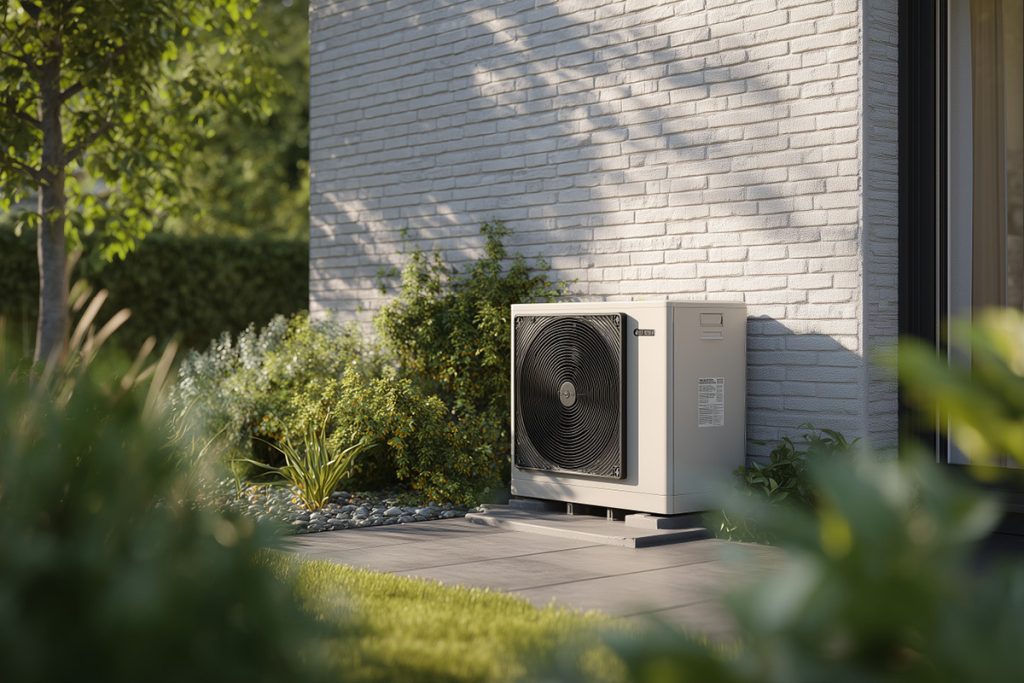
Solar heating
A sustainable supplement that utilizes the sun's energy for hot water and possibly underfloor heating. Reduces energy consumption but requires a secondary heat source in the winter months for those of us who live in Northern Europe.
Electricity, oil and gas
Traditional solutions that are still found in many older homes. Electric heating is easy to install, but expensive to operate. Oil and gas boilers are on their way out due to their climate footprint and high prices.
Radiators
The most classic and flexible solution that is still found in many homes, apartment buildings and office buildings. Works by a combination of radiant heat and convection heat. Radiators respond quickly to temperature changes and are available today in many fantastic designs, so you can decide for yourself whether they should appear discreet or decorative in the interior.

Underfloor heating
Hidden under the floor and provides even heat throughout the room. Underfloor heating is particularly popular in new construction and in the bathroom in many homes, where it gives a warm and warm experience to step out onto a warm floor after a shower. It provides high comfort, but underfloor heating responds more slowly to regulation and requires a larger installation.
Electric panels, electrical radiators and infrared heating
Some solutions that require minimal installation. Suitable for small rooms or holiday homes but they are expensive to operate as a primary heat source. Often used where it is not possible to install water-based heating or as a supplement.
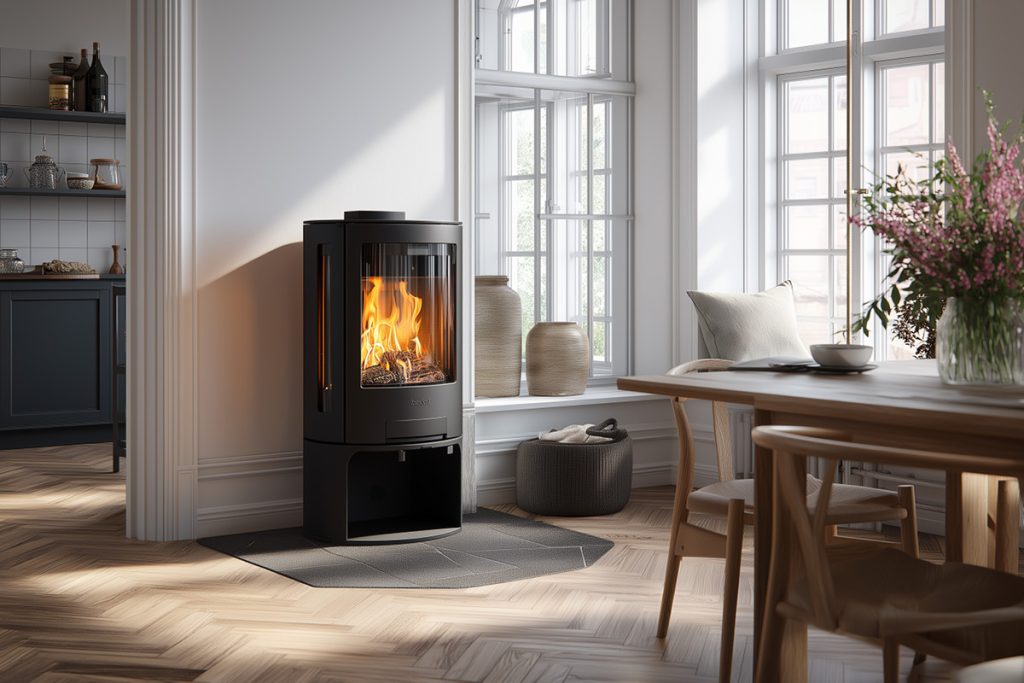
Wood-burning stove
More than just heat - a wood-burning stove or fireplace creates a mood and atmosphere with live fire and is generally just cozy. Wood-burning stoves are best as a supplement to other heating solutions and require space, a chimney and ongoing maintenance.
When choosing a heating solution, you should consider both the energy source and the distribution method:
Energy sources
| Solution | Advantages | Disadvantages |
| District heating | Stable, climate-friendly, low running costs | Only available in network-covered areas |
| Air-to-water heat pump | Efficient, low CO₂, supplies the whole house | High investment, requires outdoor unit |
| Air-to-air heat pump | Low running costs, can also cool | Noise, best for smaller homes |
| Geothermal heating | Very energy efficient | Requires large plot, high investment |
| Solar heating | Green energy, reduces consumption | Weather dependent, requires supplement |
| Electricity, oil, gas | Easy installation | High CO₂, expensive, being phased out |
Distribution Systems
| Solution | Advantages | Disadvantages |
| Radiators | Quick regulation, wide range of design options | Takes up space in the room |
| Underfloor heating | Even heat, invisible | Slow to regulate, costly installation |
| Electric panels, electrical radiators, infrared heating | Easy installation, no pipes required | High operating costs |
| Wood-burning stove | Cozy atmosphere, decorative | Limited heat distribution, needs chimney |
At Hudevad, we help homeowners, architects and installers find the right combinations of energy sources and distribution methods. Radiators often play a central role - both in terms of functionality and aesthetics - and can help complete the overall living experience. You can contact us in different ways right here


