What are the advantages and disadvantages of radiators vs. underfloor heating - and what about the unwritten rules in modern construction?
When choosing between hydronic underfloor heating and radiators, it is no longer just a matter of preference. It is a strategic and important decision that affects comfort, energy efficiency, architecture, and overall cost.
But when does one heating solution make more sense than the other? And are there, in fact, unwritten rules in the industry about when to use each system?
Two principles – two ways of understanding heat
Fundamentally, the two solutions differ in how they deliver heat:
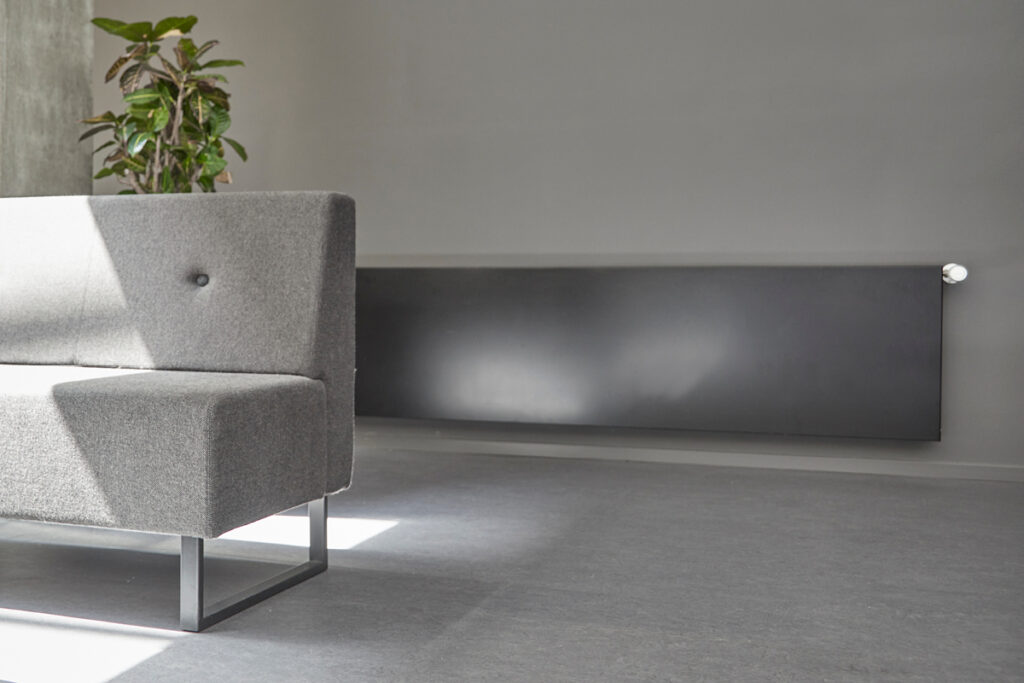
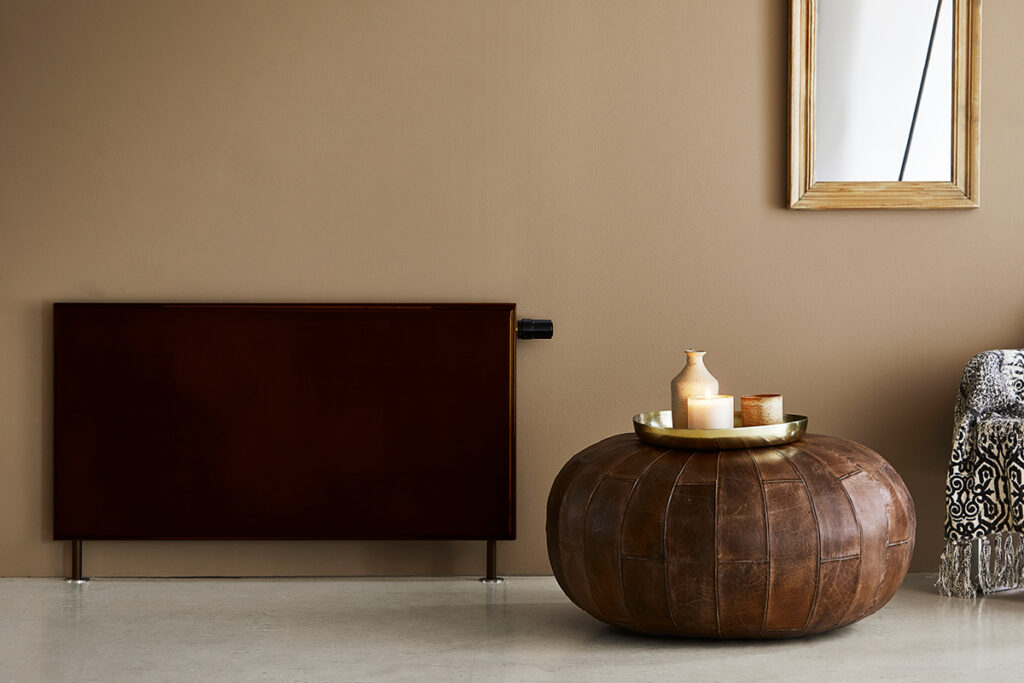
Radiators transfer heat to the air where they are installed, creating circulation and movement that makes the room feel comfortable.
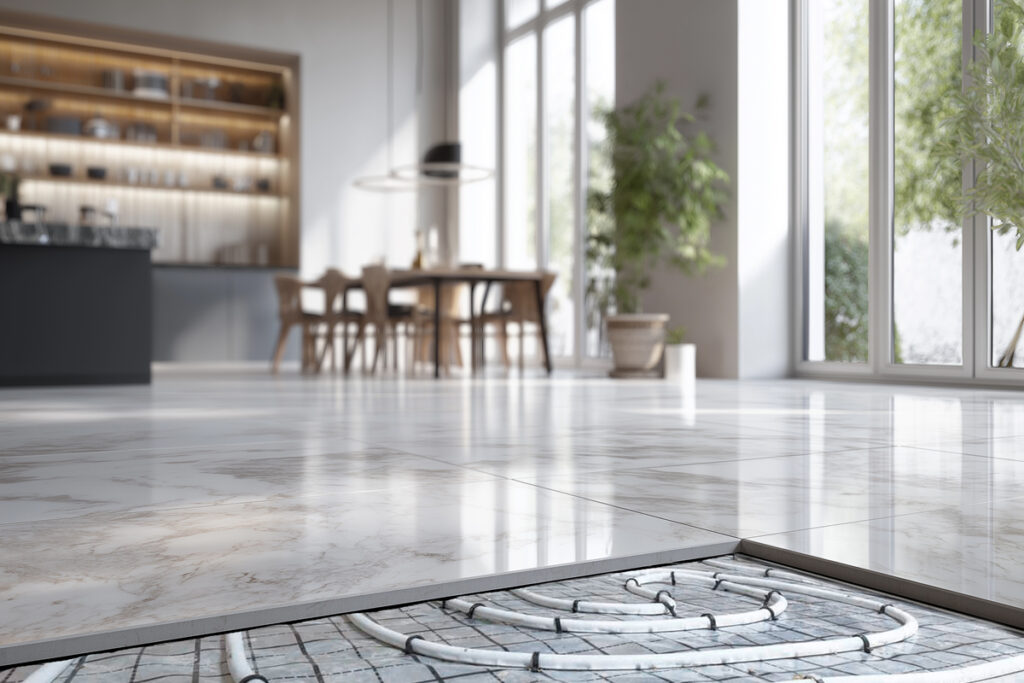
Underfloor heating warms the floor itself, distributing heat evenly upwards across a much larger surface.
This difference is crucial – both in how we experience warmth and from a technical perspective.
Advantages of underfloor heating
Even heat distribution and high comfort
Underfloor heating creates a uniform temperature throughout the room, without cold spots. This results in a greater sense of comfort and wellbeing, especially as heat rises from below, eliminating cold floors.
Lower flow temperature = high energy efficiency
Underfloor heating typically operates at 30-35°C, compared to approximately 40–60°C for radiators.
This makes it ideal for modern, sustainable energy sources such as heat pumps, helping reduce operating costs.
Aesthetic freedom
With no visible heat emitters, underfloor heating allows greater flexibility in interior design and architecture.
Improved indoor climate
Less air circulation means less dust in the air, which is beneficial for allergy sufferers.
Disadvantages of underfloor heating
Slow response time
Underfloor heating reacts more slowly to temperature changes, especially when embedded in concrete. It takes longer to heat up and cool down, making it less suitable for rooms with fluctuating heating needs.
Higher installation costs
Installation is typically more expensive than radiators, as the process is more extensive and complex.
Insulation requirements
Efficient operation requires a well-insulated building. Cracks, air leaks, and poorly insulated areas (thermal bridges) must be minimized, and insulation beneath the system is essential to prevent heat loss into the ground. In older buildings this can require significant renovation.
Advantages of radiators
Fast response and precise control
Radiators respond quickly to temperature changes, offering a high level of control and immediate access to heat when needed. They can easily be turned down or off, making them ideal for rooms with varying heating demands.
Suitable for older buildings
Radiators deliver high heat output and are particularly effective in less insulated homes or where foundation insulation is not feasible.
Lower installation costs
Radiators are simpler and more cost-effective to install, as they require less intrusive work on the building structure.
Disadvantages of radiators
Uneven heat distribution
Especially with older models, heat can concentrate around the radiator, creating temperature differences and less consistent comfort throughout the room.
Limits interior layout
Radiators are often placed under windows, which can restrict interior design. They also require clearance for proper air circulation, influencing furniture placement.
Cleaning and maintenance
Radiators collect dust and require regular cleaning, which can be difficult without the right tools. Air circulation can also stir up dust. Over time, radiators may need repainting to maintain their appearance.
The unwritten rules in practice
Although there are no formal rules governing heating choices, clear patterns exist in the industry:
New builds = underfloor heating
In many modern, well-insulated homes across Denmark and Europe, underfloor heating is effectively the standard.
This is due to:
Low-temperature operation
Ease of installation during construction
Architectural freedom
Here, underfloor heating is both a technical and aesthetic solution.
Renovation = radiators (or hybrid solutions)
In existing buildings, radiators or a combination of systems is often preferred:
Radiators in living spaces
Underfloor heating in bathrooms, kitchens, and utility rooms (especially rooms with tiled floors)
This is primarily driven by cost, installation complexity, and heating requirements.
Heat pumps favour low-temperature systems
Low flow temperatures have traditionally made underfloor heating the ideal match for heat pumps. However, with modern, high-performance radiators - often designed specifically for heat pumps, the choice is increasingly a matter of preference. When installing a heat pump in an existing building, it is essential to assess whether the radiators are large enough to operate efficiently at lower flow temperatures.
Comfort vs. control
Underfloor heating = comfort and stability
Radiators = flexibility and fast response
The choice depends as much on user behaviour as on technical factors. It is essential to consider how spaces are used to achieve the best possible heating experience.
The modern approach: combination over compromise
Today, many projects adopt hybrid heating solutions:
Underfloor heating as a base load
Radiators as a supplement (for peak demand or areas where underfloor heating is not suitable)
This provides:
Energy-efficient and cost-effective operation
Faster response times
Greater architectural and design flexibility
Conclusion
There is no universal solution, only the right solution in the right context.
Underfloor heating is ideal when:
The building is new or well insulated, ensuring optimal efficiency
Comfort and aesthetics are prioritised
A low-temperature heat source such as a heat pump is used
Radiators are ideal when:
Fast and flexible heating is required
The building is older or less well insulated
Budget and simple installation are key considerations
The choice between underfloor heating and radiators is increasingly about the interaction between technology, architecture, and user behaviour and preferences.
For professional advisors and designers, it is not a question of either/or but of creating solutions where heating is not only functional, but an integrated part of the overall experience.
If you need assistance with a heating project don’t hesitate to contact us. We are always glad to help no matter your project size or installation. You can contact us here